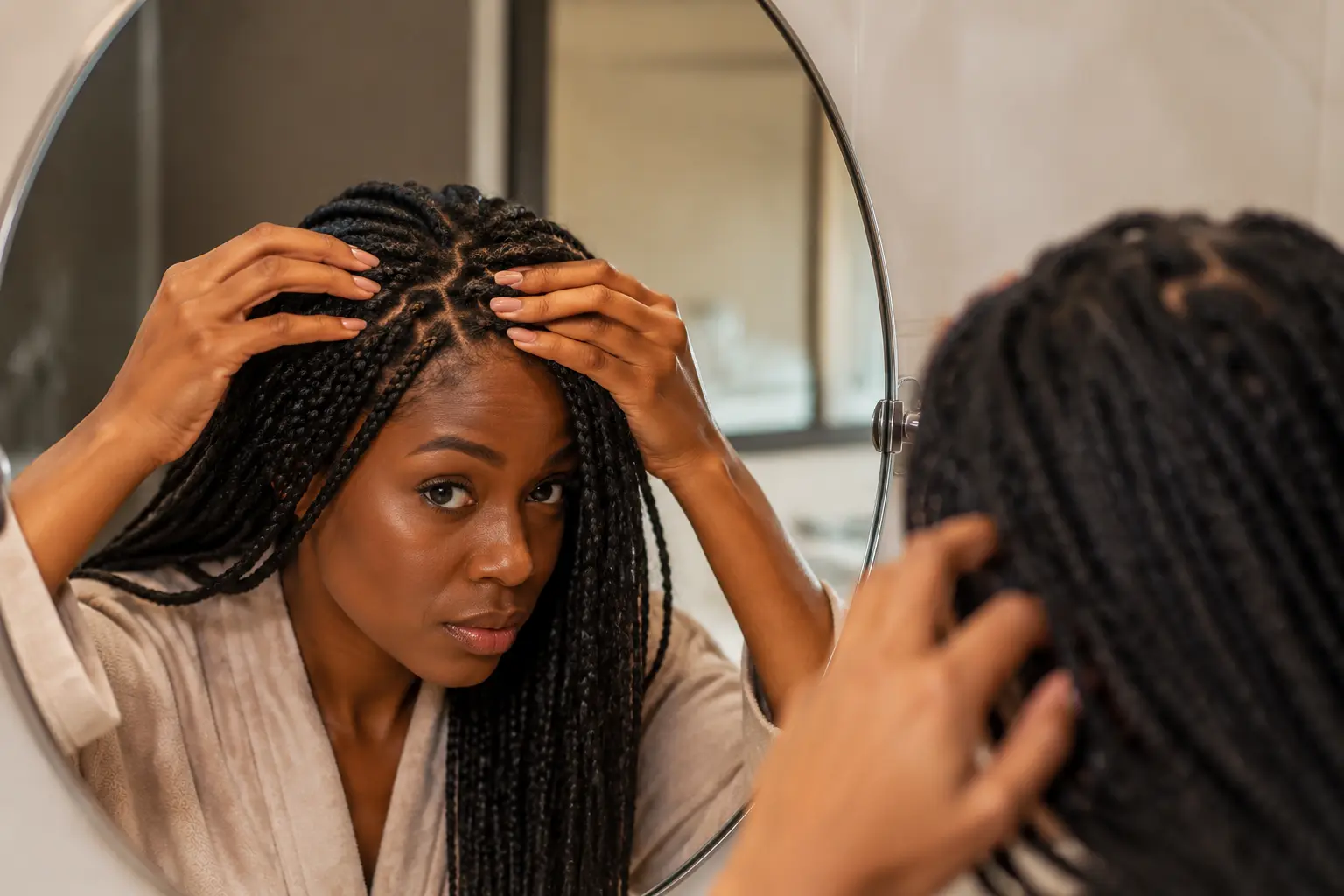
Keeping a style longer does not automatically mean receiving greater value. Protective styling should support the natural hair, and the right removal time depends on the style, growth, scalp condition and maintenance.
Watch the roots
As hair grows, the connection between the braid and scalp becomes looser. Excessive new growth can increase tangling at the root, especially if shed hair and product buildup begin to collect.
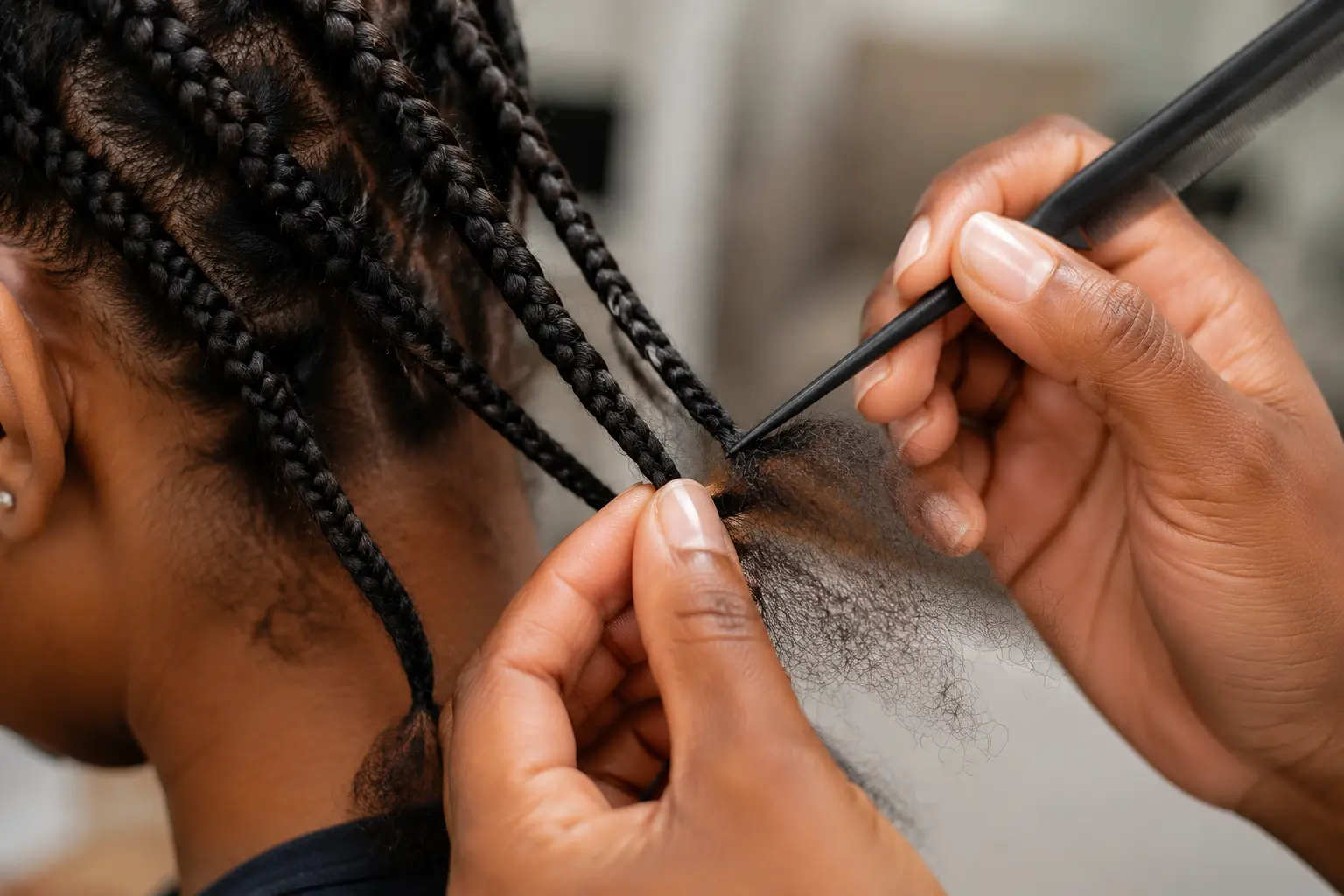
Listen to the scalp
Persistent itching, tenderness, sores, swelling, odor or unusual flaking should not be ignored. Remove the style when appropriate and seek licensed medical guidance for symptoms that are severe or do not resolve.
Assess buildup and matting
Product, lint and shed hair can accumulate over time. If cleansing and drying are no longer manageable, or the roots are beginning to mat, delaying takedown may make removal more difficult.
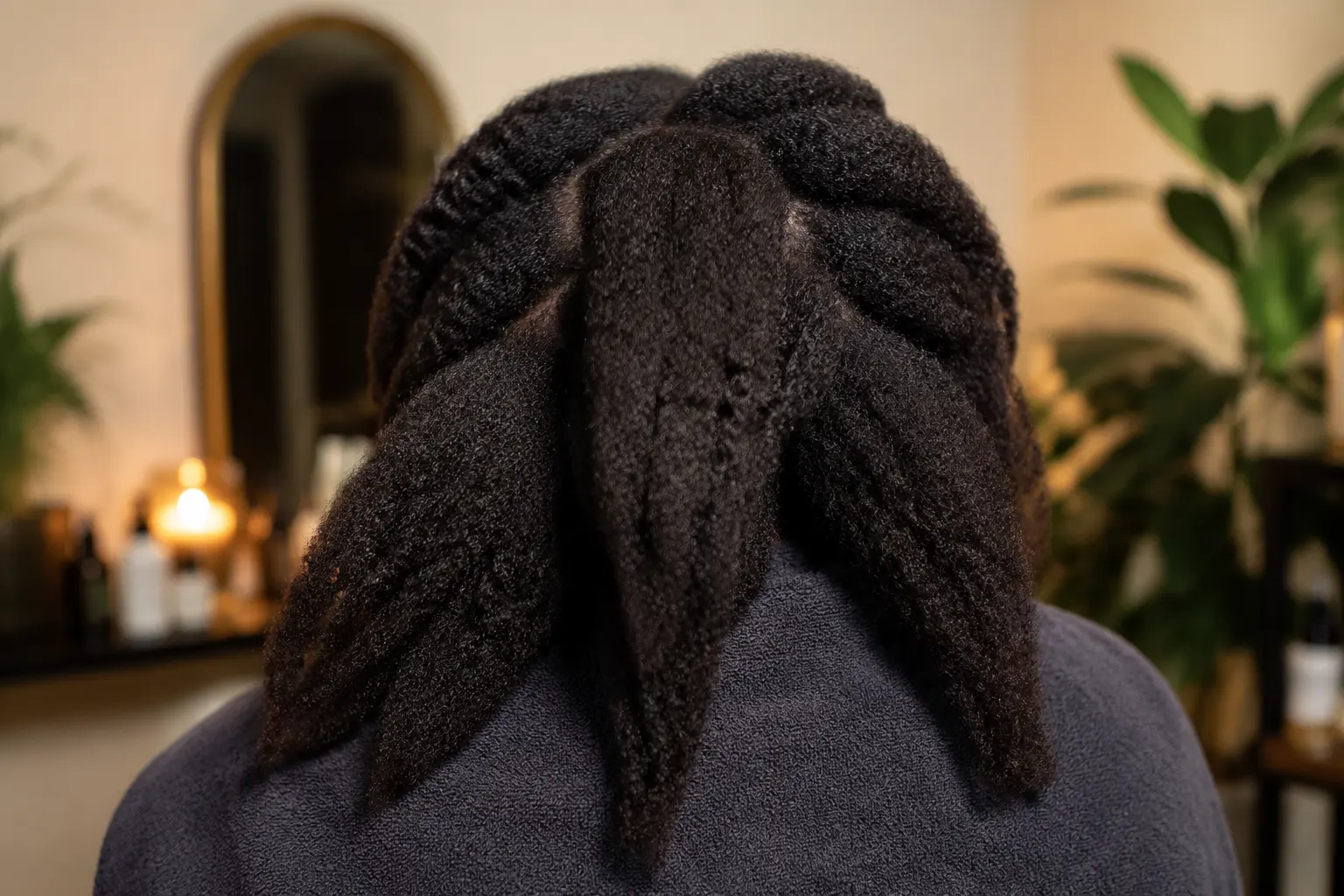
Remove patiently
Work in sections, use adequate slip and separate shed hair gently before washing. Rushing the takedown can cause avoidable breakage.
For personalized styling guidance, discuss your hair, desired result and maintenance routine during consultation. Health concerns require assessment by an appropriate licensed professional.